
What is Krav Maga?
“Embraced by the FBI and SWAT teams alike, Krav Maga is also a staple of high-end gyms across the globe, where a faster-paced and less-combative version provides a workout that could literally save your life.” – TIME Magazine
Krav Maga (pronounced “krahv mah-GAH”) is a modern self-defense and fighting system, formed in the last 100 years, built on a few core principles: when you are under real stress, you will not perform a technique you had to think about; and the techniques have to be intuitive and quick to learn. Krav Maga starts from what your body already does when it's startled (flinch, turn, cover) and builds trained responses on top of those instincts. Because of this, Krav Maga is practical and intuitive for people of any age, shape, or size. You develop skills quickly and effectively, enabling you to take life saving skills and strategies with you on day one.
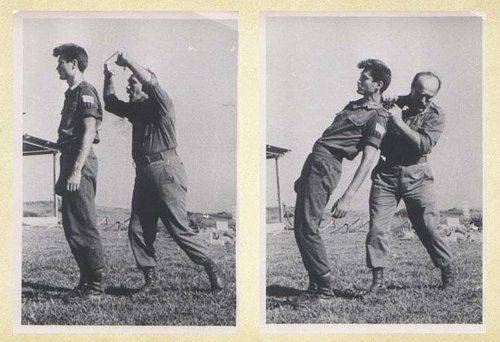
Krav Maga (“contact combat” in Hebrew) was developed in the 1950s, combining the most effective techniques and philosophy from various martial arts such as boxing, judo, wrestling, and fight training. It was originally taught to the Israeli Army, and instruction for civilians began in the late 70s. Multiple forms of Krav Maga continue today: civilian (self-defense), law enforcement (arrest or detain), and military.
Why should I train in Krav Maga?
“Part of the Krav Maga philosophy is that the best way to win a fight is not to get into a fight. So we spend a lot of time figuring out how do you de-escalate situations and win through avoidance of conflict,’ [the CEO of PayPal] says. When conflict is unavoidable, Krav Maga teaches how to use everything at your disposal to neutralize a threat while remaining calm under pressure.” – Wall Street Journal article featuring Dany Zelig
Krav Maga is a pure self defense and striking system. There are no competitions or showcases for self defense scenarios. We train in Krav Maga to help us avoid and survive the worst case scenarios. If someone is threatening your life, we train on how to avoid that scenario to begin with, and if it is already beyond the point of no return, we are trained to use the most effective strikes and techniques to prevail, while under extreme stress. There are no elaborate choreographies nor absolutes. There are no uniforms and no traditions. We do not train in Krav Maga to start fights or show off.
It's worth saying again: This is not for your ego, and there is nothing to win. All that matters is getting yourself and the people with you out of a bad situation intact. In fact, the majority of what you'll learn is how not to be there when it happens. You are preparing to be the person who was ready.
Imi Lichtenfeld, who founded the system, put the whole purpose in one line: train "so that one may walk in peace."
Training in Krav Maga
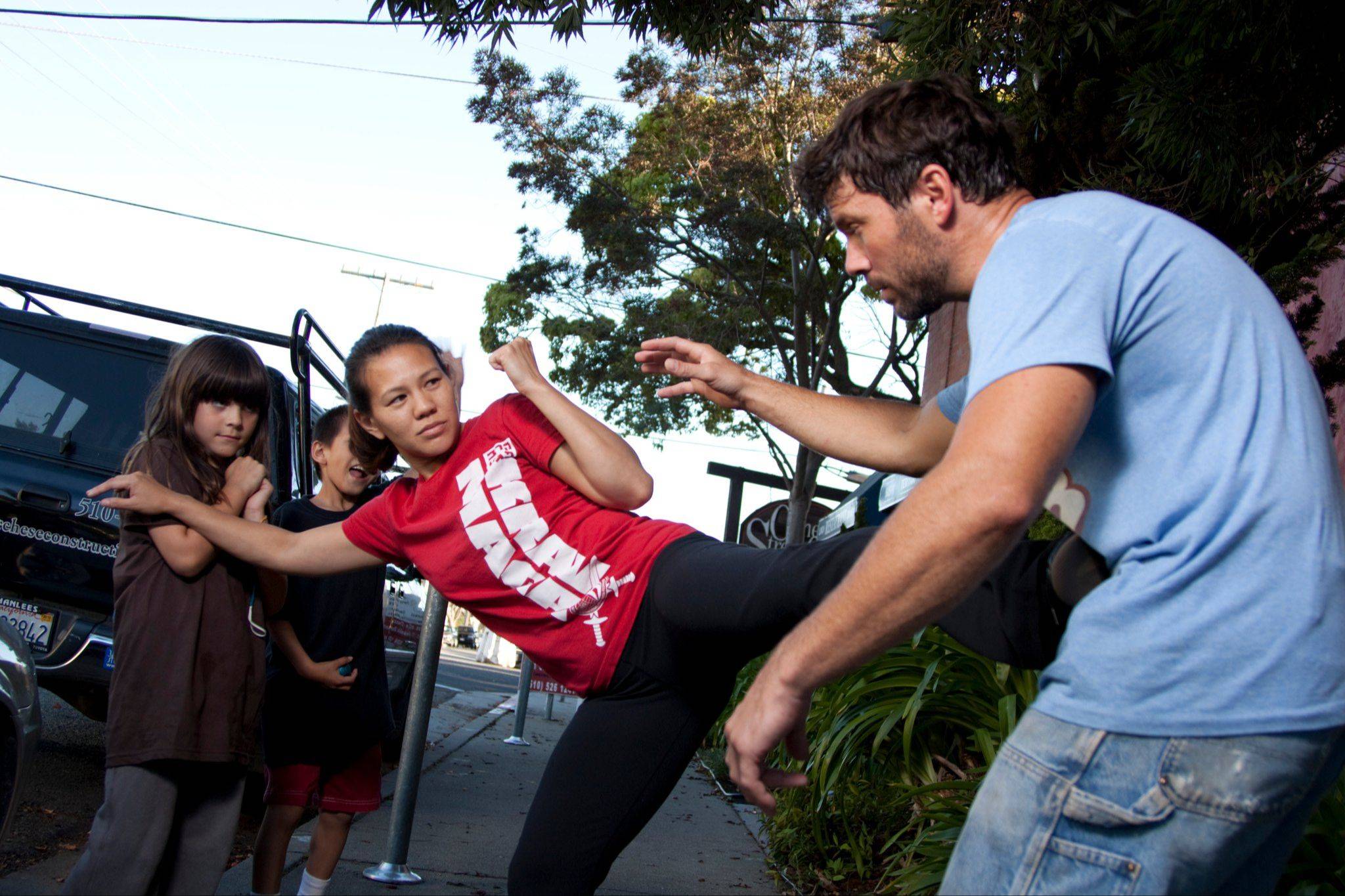
No experience is necessary to begin Krav Maga. In the beginning, you will learn basic stances, striking, techniques for falling and getting up safely, and basic defenses against common attacks including chokes and headlocks. In addition to learning how to deal with an attack, you will train to perform better under stress and learn awareness and prevention techniques that will help keep you from getting into problematic situations.
After the basics, you will train to deal with multiple attackers at once, weapons, confined spaces, and more complicated situations, standing up or on the ground. The techniques build because the stress and complexity builds and we want you to focus on mastering one thing at a time.
Conditioning is built into the training instead of being left to you. Krav Maga has to work when you are tired and your heart is pounding, so that is how you train.
For students coming from other martial arts: our material and our purpose are different, so plan on starting at the beginning. The movements may look familiar, but what they are for might not be the same.
Training with RISE
RISE is Dany Zelig's own curriculum, taught on video, for training at home. You do not need a partner and you do not need equipment. Every drill was built to be done alone in a room, and the program was written around that.
You start at the beginning, rewatch anything that did not land the first time, and move up when you can do the material under stress and fatigue. This is not a 3 day belt-for-pay program. We've seen the lives that Dany's training has saved, and that was done with time and focused practice.
Learning in person is still the best way to train Krav Maga, because an instructor can correct you while you are doing it. Dany taught that way for close to four decades, and he still teaches private and semi-private sessions by request. Get in touch if you are within reach.
Why train with Dany Zelig
Dany Zelig has been teaching Krav Maga since 1987. He was certified directly by Imi Lichtenfeld's most senior disciple, which puts him one generation away from the man who founded the system. He is passionate about Krav Maga and combat sports, cross training and learning from every expert we could find. He was the California Director of the IKMF, holds instructor certifications from several Krav Maga federations, has built and run schools for most of his career, and has been sought out as a mentor to many Krav Maga schools and instructors around the world. Through his rigorous Krav Maga Instructor program that he developed, he has certified generations of instructors who still teach today.
His classes were always serious without being self-important, and the material here is taught the same way.
"He doesn't just teach his students to repeat moves– he works on improving our situational awareness, on our instincts, and reactions… I think he's a full-time life coach to so many of us." Emiliya U.
Want to know more?
Read some of our articles on Krav Maga:
- Israeli Martial Arts: A Brief Timeline — discusses the founding and origins of Krav Maga, including its predecessor, Kapap.
- Searching for Krav Maga — discusses the evolution of modern Krav Maga, the existence of a Krav Maga authority, and how to select a Krav Maga school.
- Krav Maga & Ring Fighting — compares Krav Maga to competitive combat sports such as boxing, Muay Thai, and more.
- The Unknown Pioneers of Krav Maga — discusses some of the unsung but influential instructors in the early days of Krav Maga in Israel.